
Study in Australia After 10+2: The Smart Student’s Guide to Building a Global Career in 2027
- July 14, 2026
- Posted by: Sandeep
- Categories: Study Abroad, Study in Australia
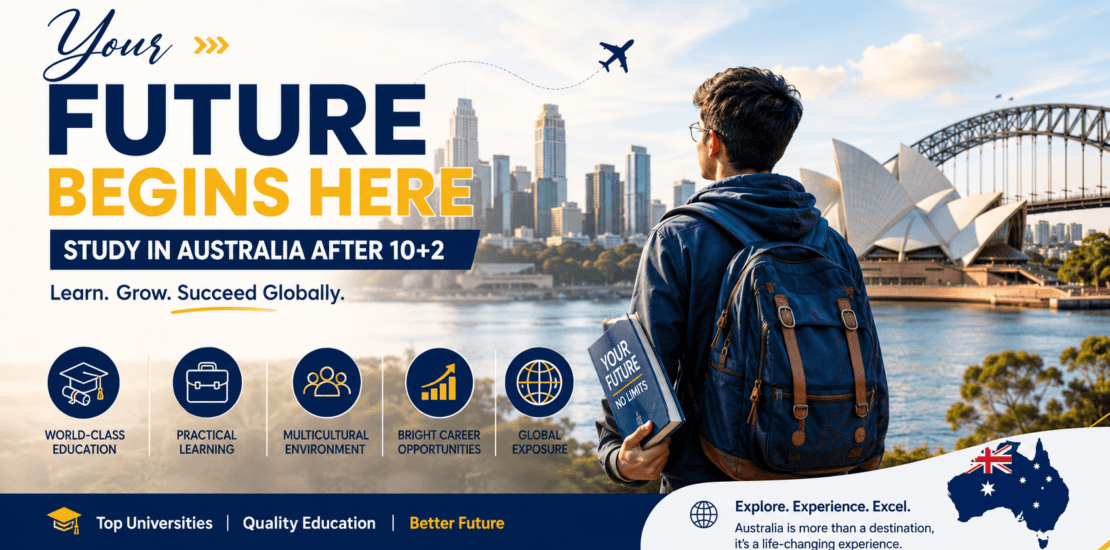
From Classroom Dreams to International Success – Everything Indian Students Need to Know Before Choosing Australia after 10+2.
Every year, thousands of Indian students complete their Class 12 examinations with one big question in mind:
What should I do next?
For some, the answer is engineering or medicine in India. For others, it’s preparing for competitive exams. But an increasing number of students are choosing a different path—studying abroad in Australia.
Why?
Because today’s students aren’t just looking for a degree. They’re looking for international exposure, practical learning, better career opportunities, and a lifestyle that prepares them for the future.
Australia has become one of the most preferred destinations for Indian students because it offers world-class education, globally recognized qualifications, excellent student support, and opportunities to work while studying.
If you’ve recently completed your 10+2 or are planning your future after school, this guide will help you understand whether Australia is the right destination for you.
Why Australia is Winning the Hearts of Indian Students
A few years ago, most Indian students only considered the USA or the UK. Today, Australia has emerged as one of the strongest education destinations in the world.
Here’s why
1. Degrees That Employers Trust
Australian universities consistently rank among the world’s best. Whether you study Business, Engineering, Information Technology, Nursing, Hospitality, or Design, your qualification is respected internationally.
This means your degree isn’t limited to Australia—you can build a career in many countries around the world.
2. Practical Learning Instead of Memorising Books
Australian education focuses on developing skills rather than simply passing exams.
Students participate in:
- Industry projects
- Group assignments
- Research activities
- Practical workshops
- Internship opportunities
This approach helps graduates become job-ready instead of just degree holders.
3. Safe and Student-Friendly Cities
Australia is known for its welcoming multicultural environment.
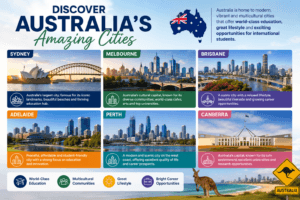
Cities like:
- Sydney
- Melbourne
- Brisbane
- Adelaide
- Perth
- Canberra
have thousands of international students from India, Nepal, Sri Lanka, China, and many other countries.
Most universities provide dedicated international student support teams, counselling services, academic guidance, and career assistance.
Can You Study in Australia After 10+2?
Absolutely.
After completing Class 12, students can directly apply for undergraduate (Bachelor’s) degrees.
Popular bachelor’s programs include:
- Bachelor of Business
- Bachelor of Information Technology
- Bachelor of Computer Science
- Bachelor of Engineering
- Bachelor of Nursing
- Bachelor of Accounting
- Bachelor of Education
- Bachelor of Design
- Bachelor of Hospitality Management
- Bachelor of Data Science
- Bachelor of Cyber Security
- Bachelor of Artificial Intelligence
- Bachelor of Social Work
Most bachelor’s degrees take 3 to 4 years to complete.
Courses That Are Trending in 2027
The job market is changing rapidly.
Instead of choosing only traditional degrees, many students are selecting programs aligned with future industries.
Some of the fastest-growing fields include:
Artificial Intelligence
AI is transforming healthcare, finance, education, transportation, and almost every industry.
Students with AI skills are expected to remain in high demand over the next decade.
Cyber Security
As cyber threats increase globally, businesses are investing heavily in security professionals.
Cyber Security graduates often enjoy strong career prospects and competitive salaries.
Data Analytics
Every company today depends on data.
From sports to banking and e-commerce, organizations need professionals who can interpret data and support decision-making.
Nursing and Healthcare
Australia continues to experience demand for qualified healthcare professionals.
Students interested in caring professions often choose nursing because of its practical learning opportunities and broad career pathways.
Engineering
Engineering remains one of Australia’s strongest academic sectors.
Popular specializations include:
- Civil Engineering
- Mechanical Engineering
- Electrical Engineering
- Software Engineering
- Renewable Energy Engineering
How Much Does It Cost to Study in Australia?
One of the biggest concerns for parents is cost.
While studying abroad is an investment, Australia offers multiple options depending on your budget.
Typical expenses include:
Tuition Fees
Depending on the university and course:
- Approximately AUD 22,000–45,000 per year
Professional degrees may cost more.
Living Expenses
Students generally spend on:
- Accommodation
- Food
- Transport
- Mobile bills
- Personal expenses
- Health insurance
The actual amount depends on the city and lifestyle.
Regional cities are generally more affordable than major metropolitan areas.
Can Students Work While Studying?
Yes.
International students are generally permitted to work while studying, subject to the conditions of their student visa.
Many students take part-time jobs in:
- Retail
- Hospitality
- Customer service
- Warehousing
- Administration
- Delivery services
- University campuses
These jobs help students gain work experience and contribute toward living expenses.
Remember, part-time work should complement—not replace—your academic focus.
Scholarships Can Reduce Your Costs
Many Australian universities offer scholarships specifically for international students.
These scholarships may be awarded based on:
- Academic performance
- Merit
- Leadership achievements
- Early application
- Specific programs
Receiving a scholarship can significantly reduce tuition fees.
Students should always check scholarship opportunities before submitting their applications.
What English Test Do You Need?
Most universities require proof of English language proficiency.
Commonly accepted tests include:
- IELTS
- PTE Academic
- TOEFL iBT
Some institutions may accept alternative pathways depending on the student’s educational background.
Preparing early for English proficiency tests improves university options.
Student Life in Australia
Life in Australia isn’t only about attending classes.
Students also enjoy:
- Cultural festivals
- Sports competitions
- University clubs
- Volunteer programs
- Networking events
- Outdoor activities
- Beaches and national parks
- International friendships
This balanced lifestyle helps students grow personally as well as professionally.
Common Myths About Studying in Australia
Myth 1: Australia is only for wealthy students.
Reality: Many middle-class Indian families successfully send their children to Australia through careful planning, scholarships, and education loans.
Myth 2: It is difficult to adjust.
Reality: Australian universities welcome students from all over the world and provide excellent orientation programs and support services.
Myth 3: Only science students can study abroad.
Reality: Students from Science, Commerce, and Arts backgrounds all have excellent study options.
Myth 4: Jobs are guaranteed.
Reality: No university can guarantee employment.
However, Australian education focuses on practical skills that improve employability.
Success depends on academic performance, communication skills, networking, and work experience.
How to Prepare During Class 12
If you’re currently studying in Class 12, start preparing early.
Here are some smart steps:
- Focus on achieving strong academic results.
- Improve your English communication skills.
- Research universities and courses.
- Prepare for IELTS or PTE if required.
- Build extracurricular achievements.
- Discuss your budget with your family.
- Gather important documents in advance.
Planning early reduces stress later.
Questions Every Student Should Ask Before Choosing a Course
Instead of selecting a degree simply because your friends are choosing it, ask yourself:
- What subjects do I genuinely enjoy?
- Which careers will grow over the next 10 years?
- Do I enjoy practical work or theoretical learning?
- What lifestyle do I want after graduation?
- Can this qualification open international career opportunities?
Choosing the right course is more important than choosing the most popular course.
Is Australia the Right Choice for You?
Australia may be the right destination if you want:
- Internationally recognized education
- Practical learning
- Modern campuses
- Multicultural experiences
- Opportunities to develop career-ready skills
- A safe and welcoming environment
- Exposure to global industries
However, studying abroad also requires responsibility, independence, and financial planning. Students should research universities carefully, understand visa requirements, and make informed decisions based on their academic goals and budget.
Completing Class 12 is more than the end of school—it’s the beginning of your future so study in Australia After 10+2 is great option for you.
Studying in Australia is not simply about earning an overseas degree. It is about developing confidence, gaining international exposure, building lifelong skills, and preparing for a global career.
The world of work is evolving rapidly. Employers increasingly value adaptability, practical experience, communication skills, and international perspectives. An Australian education can help students develop these qualities through industry-focused learning and diverse campus experiences.
If Australia aligns with your interests, career aspirations, and financial plans, starting your research early can make the journey smoother. Speak with experienced education advisors, compare universities, explore scholarship opportunities, and choose a course that matches your strengths rather than following trends alone.
Your future doesn’t begin after graduation—it begins with the decisions you make today. The right choice after 10+2 could become the first step toward a career that takes you anywhere in the world.
Disclaimer:
The information contained on this blog post is for informational purposes only and is not intended to be a substitute for professional advice. And the information provided on this blog should not be construed as professional advice.
While I strive to provide accurate and up-to-date information, I cannot guarantee that all information is complete or error-free. You should always consult with a qualified professional before making any decisions based on the information contained on this blog post.